Portugal
 Spain
Spain France
 Germany
 United Kingdom
  Monaco






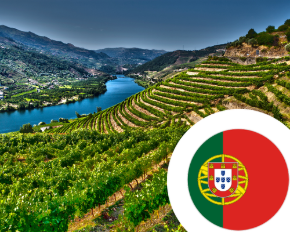



















Portugal has an ancient and prestigious winemaking heritage and is widely regarded as one of the world’s leading wine-producing nations. It created the first officially demarcated and regulated wine region – the Douro, in 1756. Portugal also boasts two winegrowing landscapes classified by UNESCO as World Heritage Sites: the Alto Douro Vinhateiro and the Paisagem Vinha da Ilha do Pico in the Azores.
Portugal
Portugal is a relatively small country (92,072 km²) in south‑western Europe, occupying the western part of the Iberian Peninsula, which it shares with Spain. It also includes two Atlantic archipelagos, the Azores and Madeira, with the former marking Europe’s westernmost point.
The country has around 10.5 million inhabitants, most of whom live along the coastline, in particular in the urban corridor between Lisbon and Porto.
Portugal’s regions experience varied climatic conditions: coastal zones enjoy mild temperatures throughout the year, while inland areas are marked by colder winters and very hot, dry summers.
The terroir of Portugal
Terroir refers to the combination of elements such as soil, climate, altitude, slope, and sun exposure that gives a wine its distinctive personality. Portugal has centuries of experience in understanding and harnessing the particularities of each terroir to craft characterful wines.
According to the Portuguese Meteorological Institute, the country is generally characterised by a temperate, humid climate with dry summers, though some areas of the Beja district present a clearly arid profile.
Portugal’s diversity of soils is remarkable: sandy, schistous, granitic, limestone, basaltic and clay‑rich soils are all present and contribute to the great variety of wine styles.
The art of the blend in Portuguese wine
A blend is a wine made from two or more grape varieties. When a wine is produced from a single grape variety, it is known as a varietal or monovarietal wine.
Portuguese winemakers have an international reputation as experts in the art of the blend. They skilfully combine grape varieties to highlight specific attributes – fruit, floral notes, structure, freshness and acidity – resulting in harmonious and complex wines.
There are two main approaches to blending:
Blend in the vineyard – different grape varieties are interplanted and harvested together. This is common in old vineyards, where the exact composition of the field blend is often not fully documented.
Blend in the cellar – blending can occur before fermentation, with grapes vinified together, or after fermentation, when finished wines from different varieties are carefully combined, based on tastings and analysis, to create the final cuvée.
Some classic regional blends are:
- Lisbon / Tejo / Setúbal Peninsula – Touriga Nacional / Castelão
- Douro – Touriga Nacional / Tinta Roriz / Touriga Franca
- Bairrada – Bical / Maria Gomes; Touriga Nacional / Baga
- Dão – Encruzado / Malvasia Fina
- Alentejo – Roupeiro / Antão Vaz / Arinto; Trincadeira / Aragonez / Alicante Bouschet
- Vinhos Verdes – Loureiro / Avesso / Arinto; Alvarinho / Trajadura
Wine traditions that still remain in Portugal
- Traditional grape treading and fermentation in granite or stone lagares
- Fermentation and ageing in clay amphorae
- Skin‑contact techniques for certain white wines
- Fermentation using indigenous yeasts naturally present on the grape skins
- Ageing in large, old wooden vats and casks
Wine regions of Portugal
Azores – this Atlantic archipelago of nine islands lies midway between Europe and North America. It contains three protected designations of origin: Graciosa, Biscoitos and Pico.
The oceanic influence is very strong, resulting in high rainfall and mild temperatures year‑round. The soils are extremely poor and of volcanic origin.
Vines are traditionally planted in small stone‑walled enclosures, or “corrals”, which protect them from wind and sea spray. The black volcanic walls store heat during the day and release it at night, helping the grapes to ripen.
Alentejo – one of Portugal’s largest and most renowned wine regions, responsible for some of the country’s most celebrated wines. It includes eight appellations of origin: Reguengos, Borba, Redondo, Vidigueira, Évora, Granja‑Amareleja, Portalegre and Moura. Borba, Évora, Redondo and Reguengos generally yield fresher, fruit‑driven, softer wines, while Granja‑Amareleja, Moura and Vidigueira, with poorer, drier soils, tend to produce richer, warmer wines.
The Alentejo is mostly a gently rolling plain that covers almost a third of Portugal. The climate is distinctly Mediterranean: hot, dry summers and low rainfall. The main soil types are schist, clay, marble, granite and limestone.
Algarve – situated at Portugal’s southern tip, the Algarve is separated from the Alentejo by a chain of hills. It comprises four appellations of origin: Lagos, Portimão, Lagoa and Tavira.
The climate varies across the region: to the east of Faro it is warmer and more strongly influenced by the Mediterranean, whereas to the west conditions are cooler, more humid and temperate. Soils include sandy, clay, limestone, sandstone and litholic formations, with some schistous slopes.
Bairrada – one of the first Portuguese regions to specialise in sparkling wine, and still strongly associated with this style today.
Soils alternate between clay‑limestone and sandy strips, giving rise to distinct wine profiles depending on the dominant component. The region is under strong Atlantic influence, with abundant rainfall and moderate average temperatures.
Beira Interior – located in central Portugal, this region produces a wide variety of wine styles because of the marked differences in local climate.
It is the most mountainous Portuguese wine region, with a pronounced continental climate and significant thermal amplitude: summers are short, hot and dry, while winters are long and very cold. Soils are predominantly granitic, with some schist outcrops.
Beira Interior is divided into three sub‑regions: Castelo Rodrigo, Pinhel and Cova da Beira.
Dão and Lafões – a region encircled by mountains and marked by very poor granitic soils. The surrounding ranges protect the vineyards from the most severe continental and maritime influences, moderating the climate.
Vineyards tend to be small and scattered, often planted in family‑owned parcels.
Lisbon – this region includes nine designations of origin: Bucelas, Colares, Carcavelos, Alenquer, Arruda, Lourinhã, Óbidos, Torres Vedras and Encostas d'Aire. Soils are mainly clay‑limestone and clay‑sandy.
Vineyards near the coast are strongly affected by Atlantic breezes, while those located further inland are sheltered by a series of hills and benefit from a transition to a more Mediterranean climate.
Two historic wines stand out in the Lisbon area: Bucelas, highly prized during the time of the Peninsular War, and Carcavelos, which was favoured by Wellington’s troops and later became known in England.
Madeira – vines here are grown on steep terraces carved into a mountainous island landscape of sharp slopes and deep ravines. The climate is temperate, clearly Atlantic, with consistently mild temperatures. Soils are fertile, acidic and rich in organic matter, which contributes to the naturally high acidity of the wines.
Tinta Negra is the dominant grape variety, accounting for around 80% of the island’s plantings and proving extremely versatile.
Madeira wine is a fortified wine renowned for its extraordinary longevity; properly stored, some examples can remain in excellent condition for more than 200 years.
Setúbal Peninsula – south of Lisbon, this region has two appellations of origin: Palmela and Setúbal. It is here that the famous Moscatel de Setúbal is produced.
Soils are very varied, ranging from deep, fine sands in the plains to limestone and clay‑limestone on the Serra da Arrábida slopes. The climate is Mediterranean, with hot, dry summers and mild, rainy winters.
In the 19th century, this area was home to what was then the largest continuous vineyard in the world, a single estate covering 4,000 hectares.
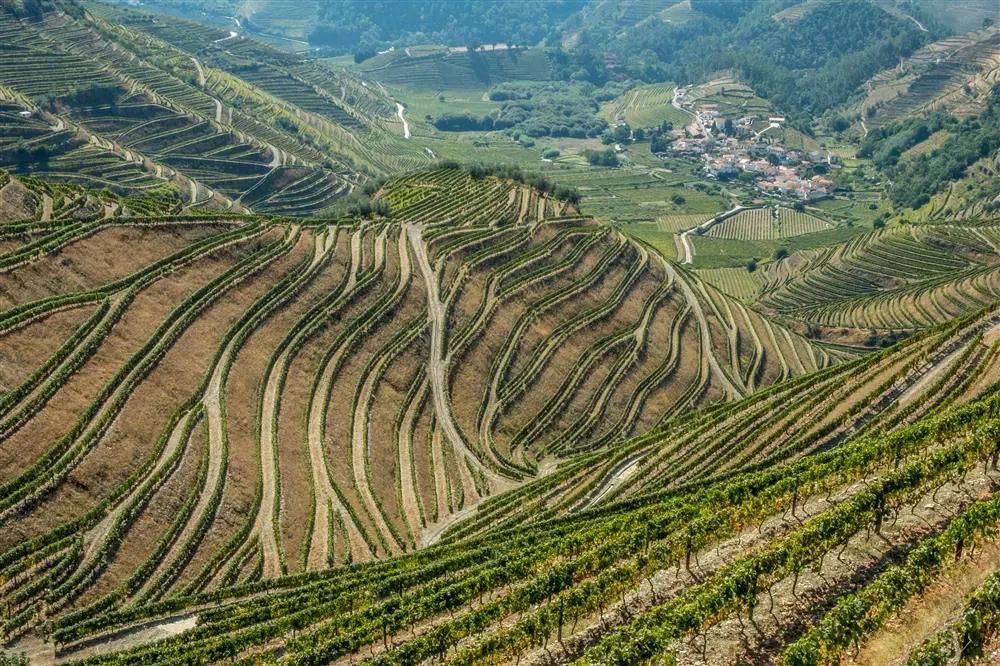
Porto and Douro – one of Portugal’s most dramatic wine regions, sculpted by the Douro river valley and by its poor, schistous soils. Its terraced vineyards are recognised by UNESCO as a World Heritage Site. Located in the north of the country, it is a mountainous area with a dry climate, cold winters and very hot summers.
The Douro is divided into three sub‑regions: Baixo Corgo, Cima Corgo and Douro Superior. It is also the birthplace of Port wine, Portugal’s most iconic fortified wine.
Trás‑os‑Montes – this region comprises three appellations of origin: Chaves, Valpaços and Planalto Mirandês.
Situated in the north‑east and separated from the coast by mountain ranges such as the Marão, it is a high‑altitude, rugged area with a dry climate, hot summers and very cold winters. Soils are mainly granitic, poor and of low natural fertility.
Tejo – formerly known as Ribatejo, this region follows the Tagus River down to Vila Franca de Xira. It lies in a transitional climatic zone with a marked Mediterranean influence.
The Tejo region has six appellations of origin: Cartaxo, Almeirim, Chamusca, Coruche, Santarém and Tomar.
Vinho Verde – an Atlantic‑influenced region with cool temperatures and abundant rainfall. Covering about 34,000 hectares in the far north of Portugal, it is divided into nine sub‑regions: Monção and Melgaço, Lima, Basto, Cávado, Ave, Amarante, Baião, Sousa and Paiva.
Types of wine in Portugal
Red Wine
Red wines account for most of Portugal’s wine production. The country’s climate and soils favour full ripening of red grapes, which enables the creation of smooth, ripe, generously flavoured reds that match contemporary consumer preferences.
White Wine
For light, crisp whites, Bucelas and the Vinho Verde region are ideal. Those seeking more aromatic whites should look to the Douro, Dão, Alentejo or Vinho Verde. For fuller‑bodied whites with more structure, the Trás‑os‑Montes region is a very good choice.
Rosé Wine
Portugal has a long tradition of rosé wines, as shown by internationally recognised brands such as Mateus and Lancers. Rosé is produced in virtually every Portuguese wine region.
Sparkling Wine
Sparkling wines are mainly produced in the cooler areas of the country. Bairrada is especially famous for high‑quality sparkling wines, particularly from Baga and Touriga Nacional. In the Távora‑Varosa region, south of the Douro, sparkling wines are often made from Malvasia Fina, Chardonnay and Pinot Noir.
Fortified Wine
Portugal produces four internationally renowned fortified wines:
- Carcavelos – originating from the Carcavelos area, about 10 km from Lisbon, and traditionally made using the open‑spout method. Production is now very limited, and the wine is considered at risk of disappearing.
- Madeira Wine – produced on Madeira Island since the 15th century. Its sweetness level and alcohol content vary according to the grape varieties and style.
- Moscatel Wine – the best known comes from the Setúbal region and is made predominantly from Moscatel and Moscatel Roxo.
- Port Wine – arguably the world’s most famous fortified wine. Produced in the Porto and Douro region, it is celebrated for its capacity to age and evolve over decades.
Portuguese grape varieties
Portugal relies on grape varieties that have been selected and refined over centuries, adapting perfectly to the country’s diverse terroirs. The preservation of local varieties has always been a priority, and this commitment has resulted in remarkable biodiversity.
No other country has as many catalogued grape varieties as Portugal. Around 250 indigenous varieties are recognised, and there is also considerable intra‑varietal diversity, with numerous clones for many grapes. This wealth of genetic material allows Portugal to produce an exceptionally wide range of wines, catering for very different tastes and styles.
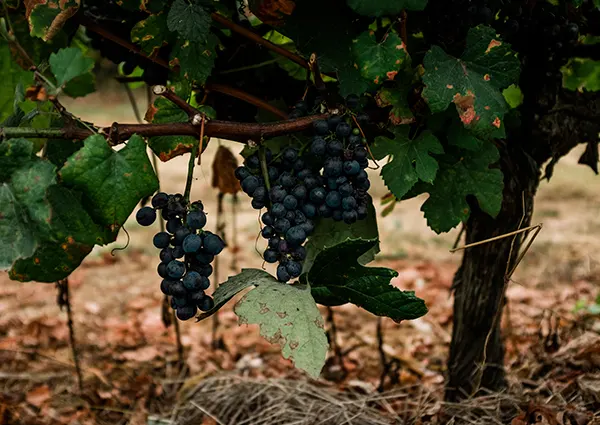
The most common red grape varieties in Portugal
Touriga Nacional
- Region – Dão, Porto and Douro, Bairrada, Alentejo and Tejo
- Considered Portugal’s flagship red variety, it has been grown across the country for many generations and, in the 19th century, occupied the majority of vineyard area. Its versatility allows for a broad spectrum of wines, from still reds to sparkling and Port wines.
Touriga Franca
- Region – Porto and Douro, Bairrada, Alentejo and Setúbal Peninsula
- Produces balanced, structured wines with good body and expressive aromatics.
Tinta Roriz / Aragonez
- Region – Porto and Douro, and Dão
- One of the key varieties in Port and Douro blends, contributing structure, colour and aroma.
Trincadeira / Tinta Amarela
- Region – Alentejo, Tejo, Lisbon, Porto and Douro
- Yields deeply coloured wines, with vibrant acidity and firm tannins.
Baga
- Region – Bairrada and Dão
- Known for high acidity and outstanding ageing potential, particularly in Bairrada.
Castelão
- Region – Setúbal Peninsula, Tejo, Lisbon and Algarve
- The most widely planted red variety in southern Portugal, producing wines that range from fresh and fruity to more concentrated and rustic styles.
The most common white grape varieties in Portugal
Alvarinho
- Region – Vinho Verde
- Moderate alcohol and naturally high acidity. Typically dry and firm, it is frequently bottled as a single‑variety wine but is also blended with Loureiro and Trajadura in Vinho Verde.
Arinto
- Region – Lisbon (Bucelas) and Vinho Verde
- Renowned for its vibrant acidity and moderate alcohol, Arinto has excellent ageing capacity, whether matured in stainless steel or oak.
Fernão Pires / Maria Gomes
- Region – Bairrada, Lisbon, Tejo, Setúbal Peninsula and Alentejo
- The most widely planted white grape variety in Portugal, capable of producing aromatic and approachable wines.
Encruzado
- Region – Dão
- Gives wines with subtle aromas but great depth, body and remarkable ageing potential. It responds particularly well to barrel fermentation and ageing, yielding whites with excellent freshness, balance and complexity.
You can see our video on the topic you were reading here: